Introduction
Sustainability is no longer a brand differentiator — it is a baseline expectation. From university graduates choosing their first employer to senior executives evaluating offers, candidates increasingly consider a company’s environmental commitments as part of their decision.
Yet many companies that publish ambitious sustainability reports continue to onboard new employees with kits full of cheap plastic items, non-recyclable packaging, and merchandise designed to be discarded after minimal use.
There is a better way. Sustainable employee onboarding kits prove — physically and tangibly — that your company’s environmental commitments extend beyond the annual report. This article explores what genuinely sustainable kit design looks like and how to avoid the greenwashing traps that undermine credibility.
What Does a Truly Sustainable Onboarding Kit Look Like?
Sustainability in onboarding kits operates across three dimensions: materials, production, and logistics. A truly sustainable kit performs well across all three — not just one.
Sustainable Materials
Every item in your kit has a material footprint. Here is how to make better choices:
- Notebooks — choose FSC-certified (Forest Stewardship Council) paper or notebooks made from recycled or stone paper. Avoid plastic coatings on covers.
- Pens — opt for pens made from recycled aluminium, bamboo, or bioplastics rather than virgin ABS plastic
- Apparel — select GOTS-certified organic cotton or garments made from recycled PET bottles. These are now widely available at competitive price points.
- Water bottles — stainless steel or glass with a protective sleeve far outperforms single-use plastic alternatives in lifecycle analysis
- Packaging — uncoated kraft board (recyclable), corrugated recycled cardboard, or FSC-certified rigid boxes are all strong choices
- Void fill — replace polystyrene peanuts or bubble wrap with recycled kraft crinkle paper, corrugated honeycomb wrap, or seed paper (which recipients can plant)
Sustainable Production
Materials are only part of the story. How items are produced matters too:
- Choose printers who use water-based, VOC-free inks
- Avoid over-laminating — a soft-touch laminate box is beautiful, but it renders the board non-recyclable. Uncoated or water-based varnish finishes are more sustainable.
- Select suppliers with ISO 14001 environmental management certification or equivalent credentials
- Avoid unnecessary individual wrapping — each extra layer of packaging adds material waste
Sustainable Logistics
Shipping has a carbon footprint that deserves explicit attention:
- Choose a logistics partner that offers verified carbon offset programmes
- Consolidate shipments where possible — fewer, larger deliveries are more efficient than many small ones
- For regional delivery, consider road freight over air where timelines allow
- For international shipments, sea freight is significantly lower in carbon emissions than air freight
The Greenwashing Trap: What to Avoid
Greenwashing in onboarding kits is surprisingly common. Here are the most frequent pitfalls:
'Eco-Friendly' Labels Without Certification
A notebook described as ‘eco-friendly’ without FSC certification, recycled content verification, or third-party audit is a marketing claim, not a credential. Ask your supplier for specific certifications for every item they propose.
Sustainable Items in Non-Sustainable Packaging
An organic cotton t-shirt wrapped in a non-recyclable plastic polybag, sitting in a foil-laminated box, is not a sustainable kit. Assess the entire kit as a system, not item by item.
Low-Quality Items Marketed as Sustainable
A pen made from recycled plastic that breaks within a week is not sustainable — it has simply shifted the environmental problem from production to landfill. Durability is a core sustainability attribute. Items built to last are inherently more sustainable than cheaply made alternatives, regardless of their material composition.
Carbon Offset Without Reduction
Offsetting shipping emissions is valuable, but it should complement — not replace — genuine efforts to reduce emissions through route optimisation and freight consolidation. Be transparent with employees about what your offset programme does and does not cover.
Communicating Your Sustainability Choices to New Hires
A sustainable kit is also a storytelling opportunity. Include a small printed card — ideally on seed paper or recycled stock — that explains the choices behind the kit:
- ‘This notebook is printed on FSC-certified paper from responsibly managed forests’
- ‘Your t-shirt is made from 100% GOTS-certified organic cotton’
- ‘This packaging is fully recyclable. Please break it down before recycling.’
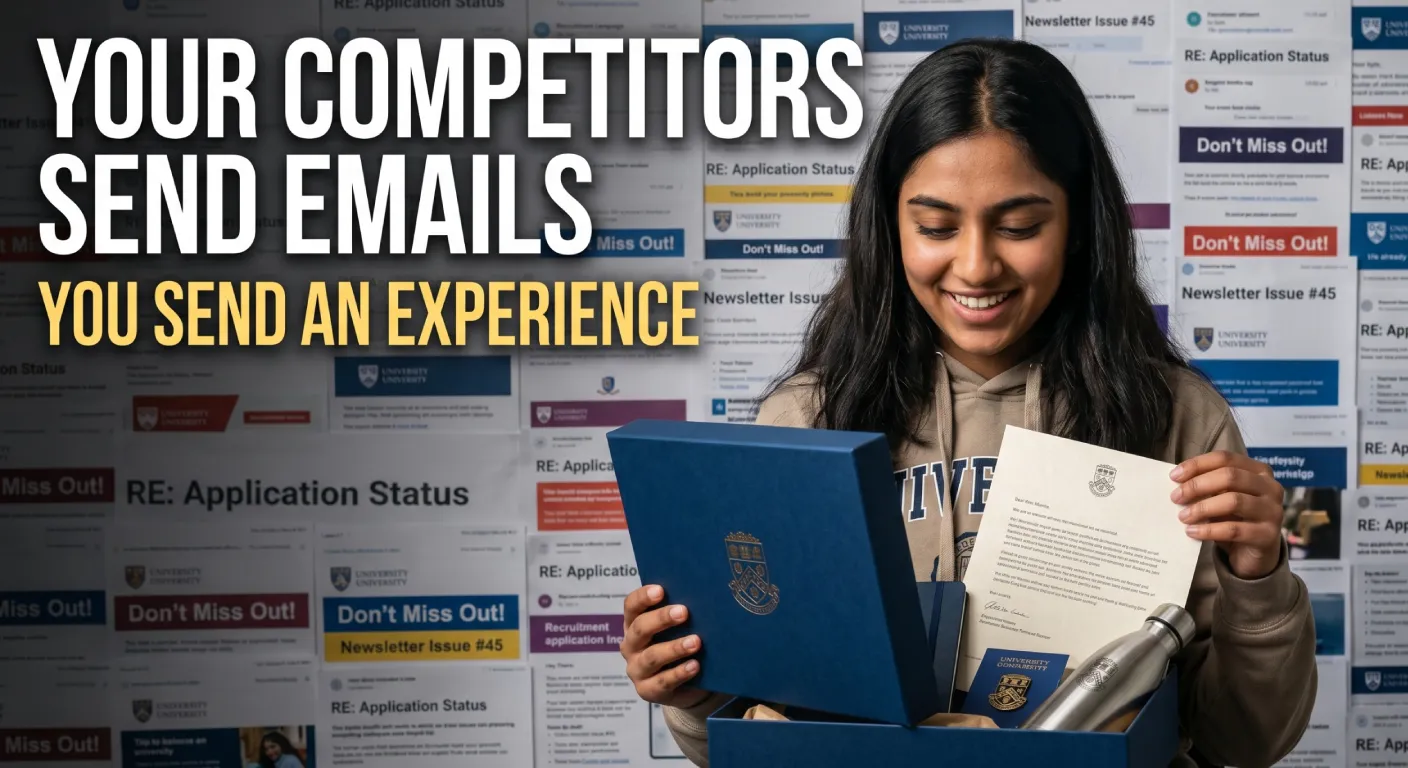
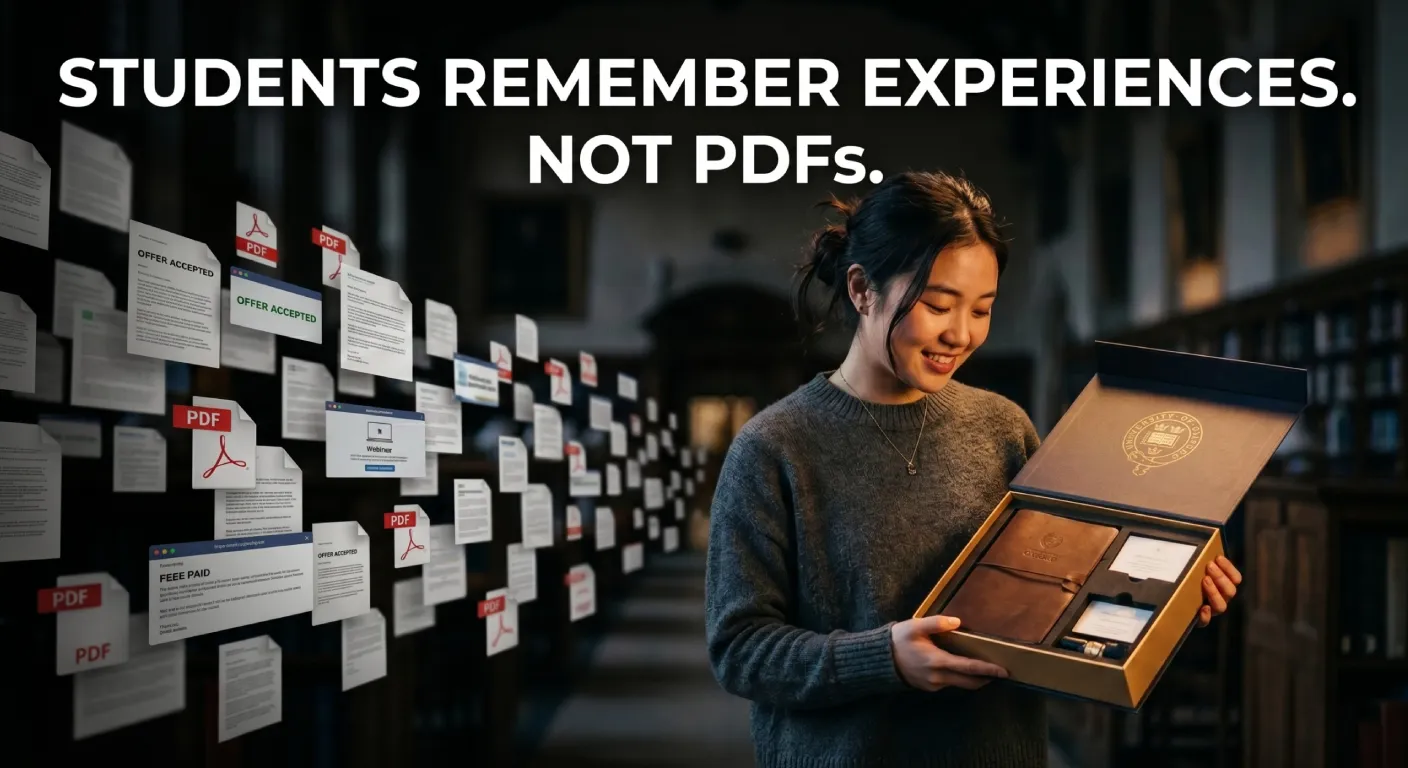
This card transforms the kit from a set of objects into a values statement. New hires arrive already aligned with your sustainability commitments because they have held the evidence in their hands.
Measuring the Environmental Impact of Your Kit Programme
Progressive companies are beginning to measure and report on the environmental footprint of their corporate gifting programmes. Metrics to consider tracking:
- Percentage of kit items with verified sustainability certifications
- Packaging recyclability rate (% of packaging materials that are recyclable at destination)
- Carbon footprint per kit shipped (including production and logistics)
- Year-on-year improvement targets
This data can be included in your annual sustainability or ESG report, demonstrating that employee wellbeing and environmental responsibility are integrated commitments, not separate initiatives.
The Business Case for Sustainable Onboarding Kits
Beyond the environmental argument, sustainable kits make business sense:
- Talent attraction — 73% of millennials say they would take a pay cut to work for an environmentally responsible company (Nielsen)
- Employer brand — sustainable kits photograph well and generate positive social media engagement
- Client alignment — for B2B companies, sustainable practices in internal operations reinforce credibility with clients who have their own ESG commitments
- Cost neutrality — sustainable materials have become cost-competitive as supply chains have scaled. In many cases, the price premium is 5–15% over conventional options — a small investment for a significant brand signal
Final Thoughts
A sustainable employee onboarding kit is not a compromise — it is an upgrade. The best sustainable kits are more beautiful, more durable, and more meaningful than their conventional counterparts. They tell a story about who your company is and what it values, from the very first day an employee walks through the door.
The transition to sustainable kits does not happen overnight. Start by substituting the highest-impact items first — packaging, notebooks, and apparel — and build from there. Set targets, measure progress, and communicate your journey honestly with your teams.
Hue Marcom is committed to sustainable marketing solutions. Our onboarding kits use FSC-certified materials, responsible print practices, and carbon-conscious logistics. We help companies build beautiful welcome kits that are genuinely good for the planet.
Explore our sustainable gifting range at www.huemarcom.com