Introduction
The same seven errors show up in South Asia recruitment budgets year after year — most of them invisible until fair season is already underway.
Most recruitment marketing mistakes aren’t dramatic. Nobody approves an obviously bad campaign. Instead, the same small miscalculations repeat quietly, year after year, because they’re baked into how the budget and calendar get built rather than into any single decision. Below are the seven that show up most often — roughly in the order they tend to surface across a recruitment cycle.
1. Building the Budget Before the Calendar
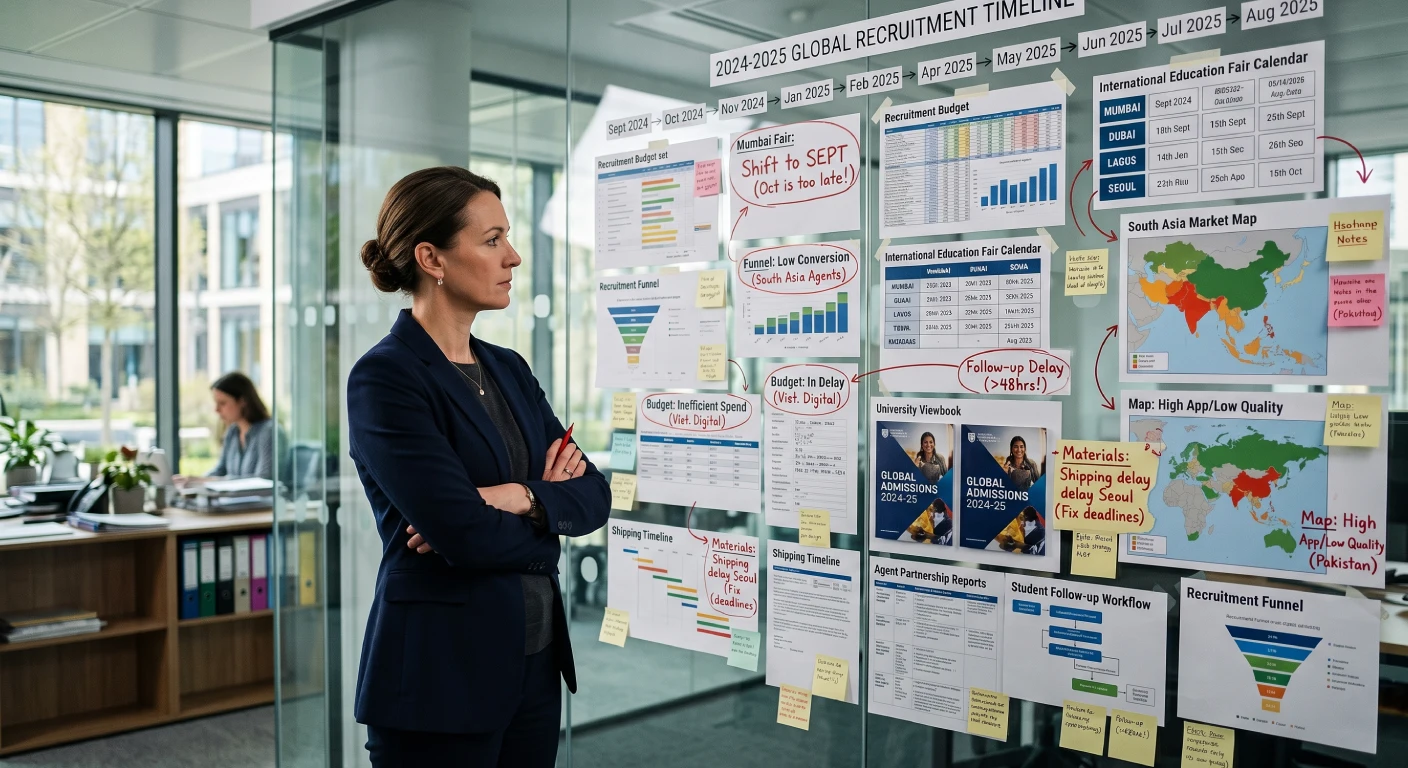
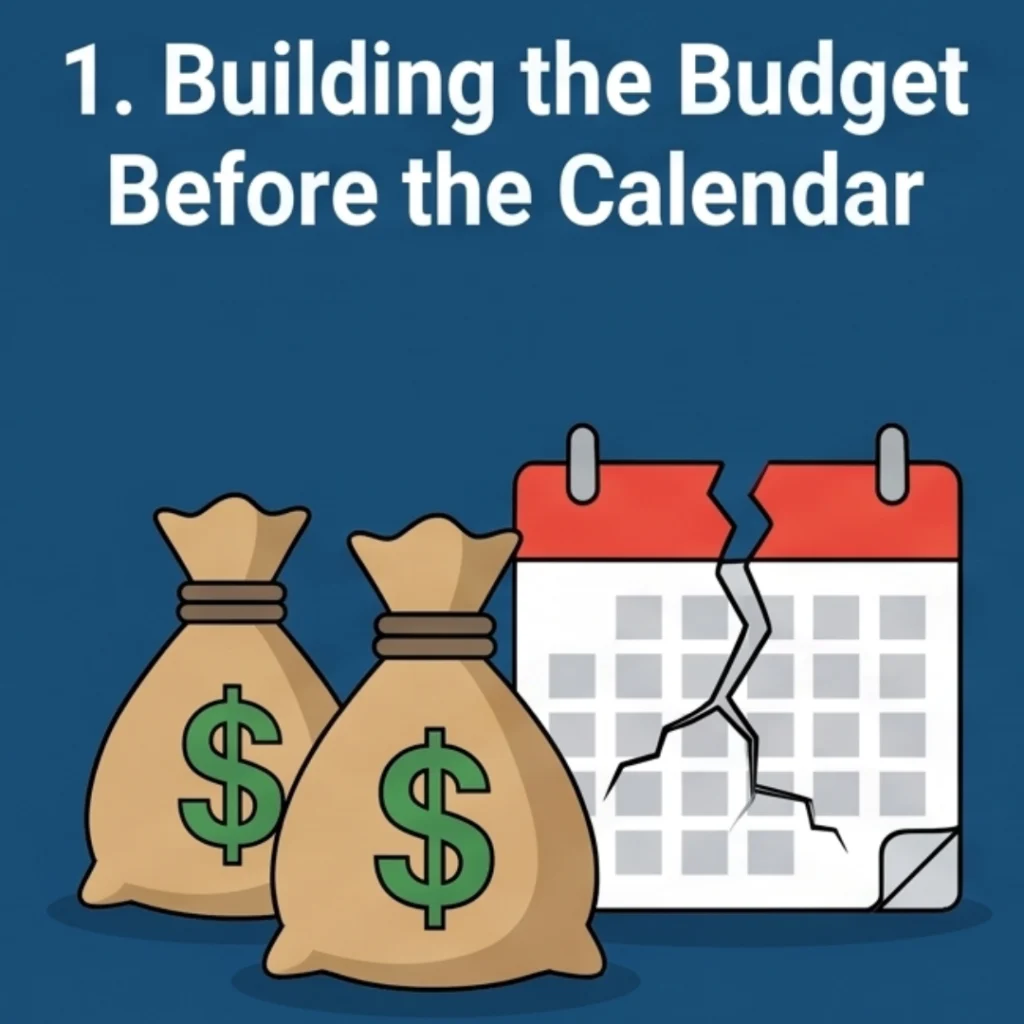
Budgets are usually finalized months before the fair calendar is confirmed, which means spend gets locked in against assumptions about timing that often shift. When a major fair moves from October to December, or a new city gets added late, the budget rarely gets revisited to match — it just gets stretched thinner across more commitments than it was built for.
The practical effect shows up as a squeeze in Q4: a newly-added fair city needs booth collateral that was never budgeted, and the money gets pulled from whatever line item hasn’t been spent yet — usually digital, since it’s the easiest to pause. The team never intended to under-fund digital; the calendar simply moved after the budget had already been locked.
2. Quoting Print Cost Instead of Landed Cost
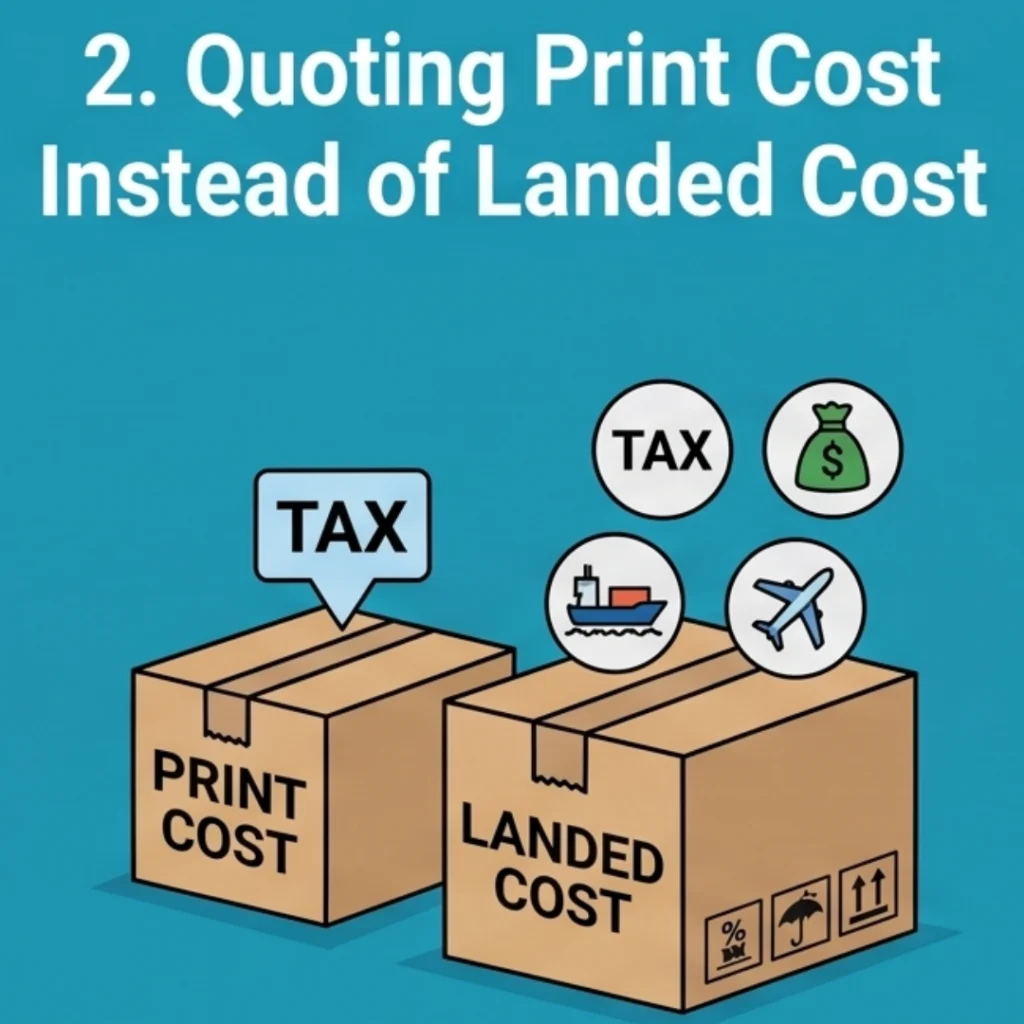
This is the single most common budget error in the region. A print quote covers exactly one thing: printing. Freight, customs clearance, warehousing ahead of fair season, and last-minute reprints routinely add 30–60% on top of that number — but because none of it appears on the original quote, none of it gets budgeted for. The gap doesn’t show up until an invoice does.
A useful habit: before finalizing any materials budget, ask a vendor for an all-in landed cost estimate through the relevant fair season — not just a unit print price. If a vendor can’t provide that figure, it’s worth treating that as information in itself about how much of the fulfilment chain they actually manage.
🎯 Hue Insight Universities often compare vendors on price per brochure. In reality, printing is usually only a fraction of total recruitment cost — shipping, customs, inventory, and emergency reprints can add far more. Evaluating the full recruitment supply chain is where the real savings are found..
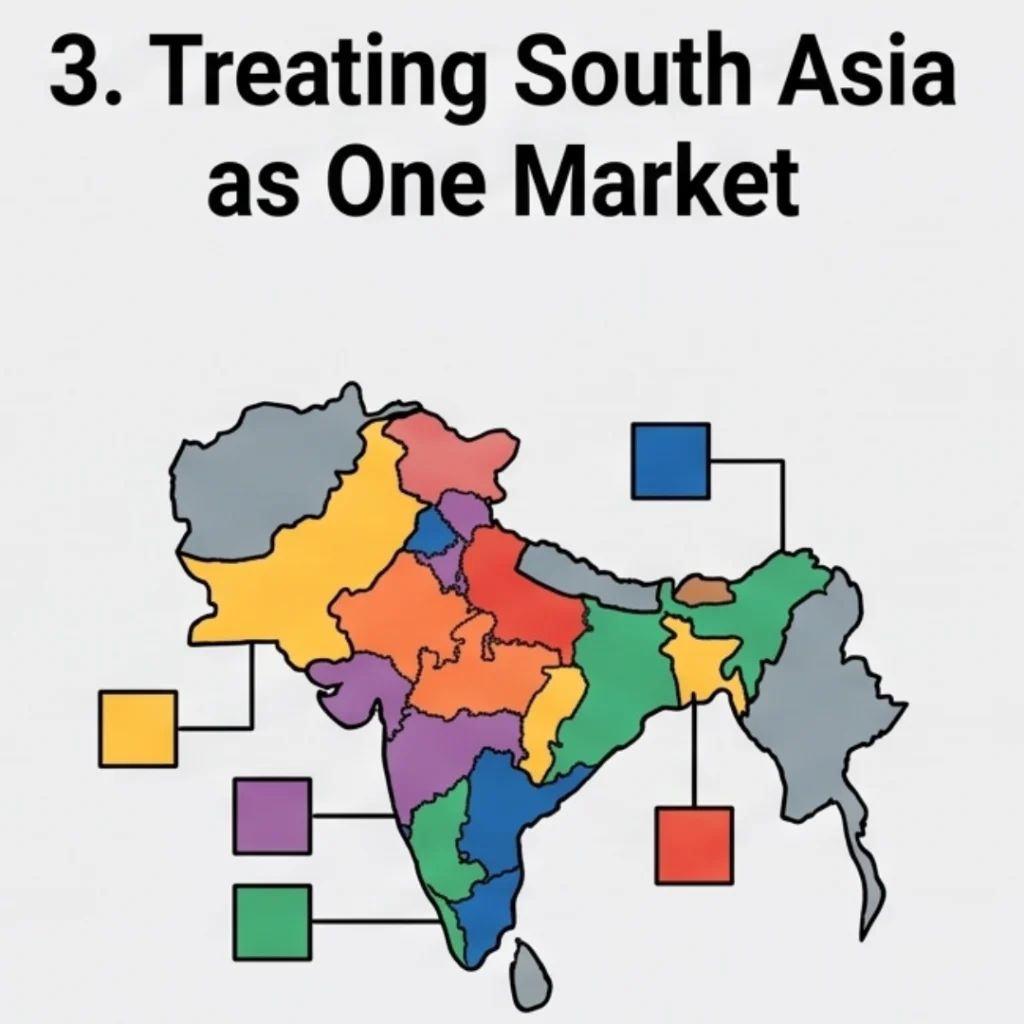
3. Treating South Asia as One Market
Urban India, Tier 2/3 India, Bangladesh, Nepal, and Sri Lanka behave differently enough that a single blended strategy tends to over-serve whichever sub-market is easiest to reach digitally and under-serve the ones still driving the bulk of applications through fairs and agents. A budget that isn’t at least tagged by sub-market can’t be evaluated for this imbalance until enrollment numbers come in — by which point it’s too late to rebalance.
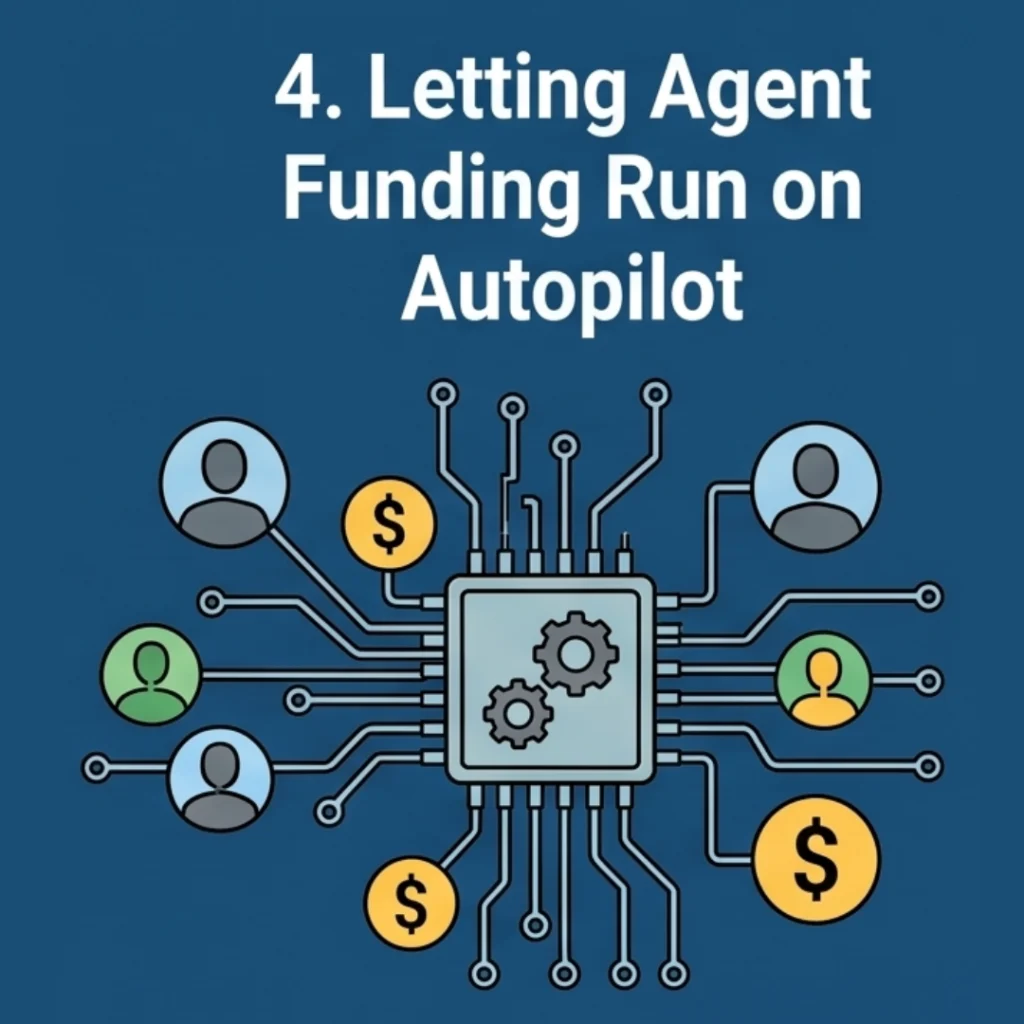
4. Letting Agent Funding Run on Autopilot
Co-marketing budgets for agent partners are frequently set once a year and left untouched regardless of performance. A small number of agents typically account for a disproportionate share of actual enrollments from any given market. Funding underperforming partners at the same level as top performers — often because revisiting the relationship feels awkward — is one of the largest recoverable inefficiencies in a typical recruitment budget.
Separating the relationship from the budget decision helps here: a quarterly conversion review, run on the numbers alone, gives the account manager a neutral basis for reallocating funds without it reading as a personal judgment on the partnership.
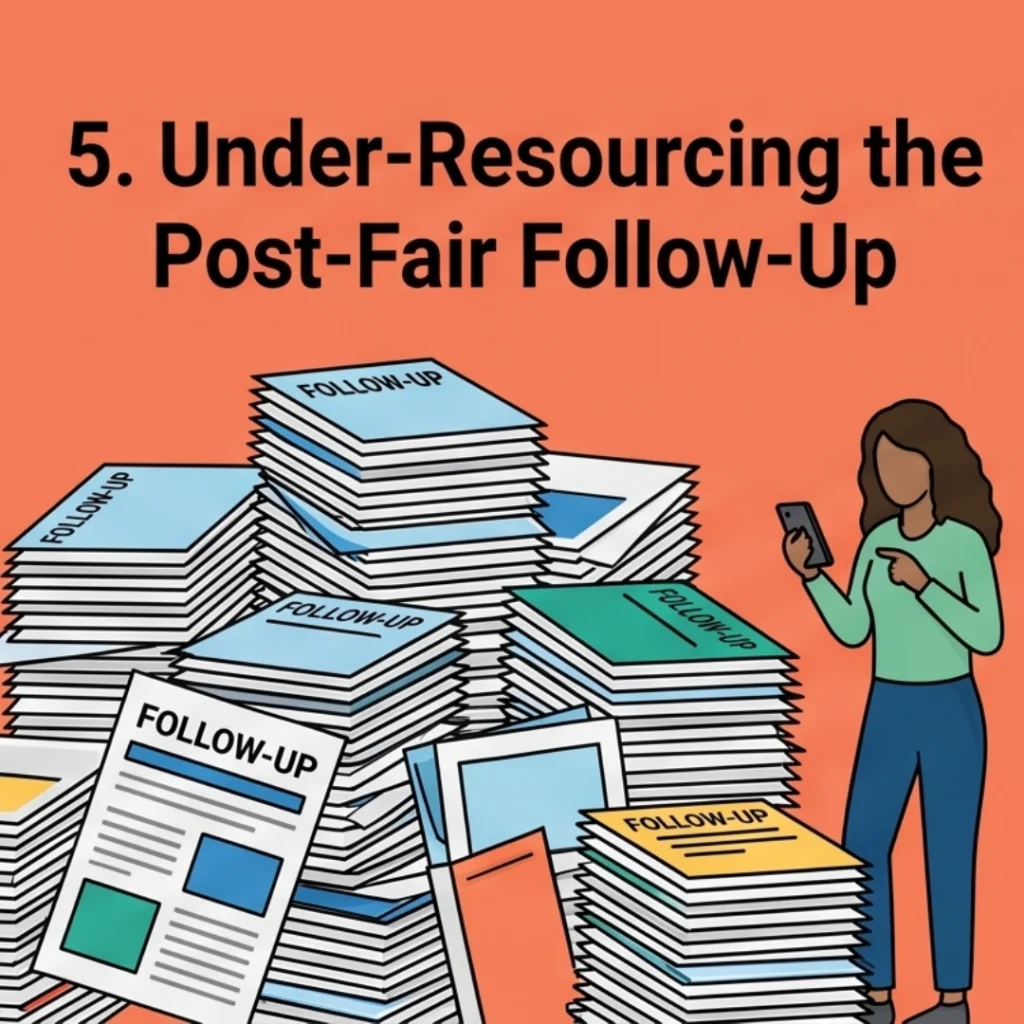
5. Under-Resourcing the Post-Fair Follow-Up
The stretch of four to six weeks after a fair, when a warm lead either turns into an application or quietly goes cold, is consistently the least-funded stage of the funnel. It’s also the hardest stage to attribute credit to, which is likely why it gets cut first when budgets tighten — even though recruitment staff themselves often point to a well-timed follow-up kit as the thing prospective students specifically remember.
A follow-up kit or personalized mailer sent within a week of a fair typically costs a small fraction of the fair itself, which makes it one of the least defensible line items to cut on cost grounds alone — the cut usually happens because the line item is the easiest one to overlook when a budget is being trimmed under time pressure, not because it’s genuinely low-value.
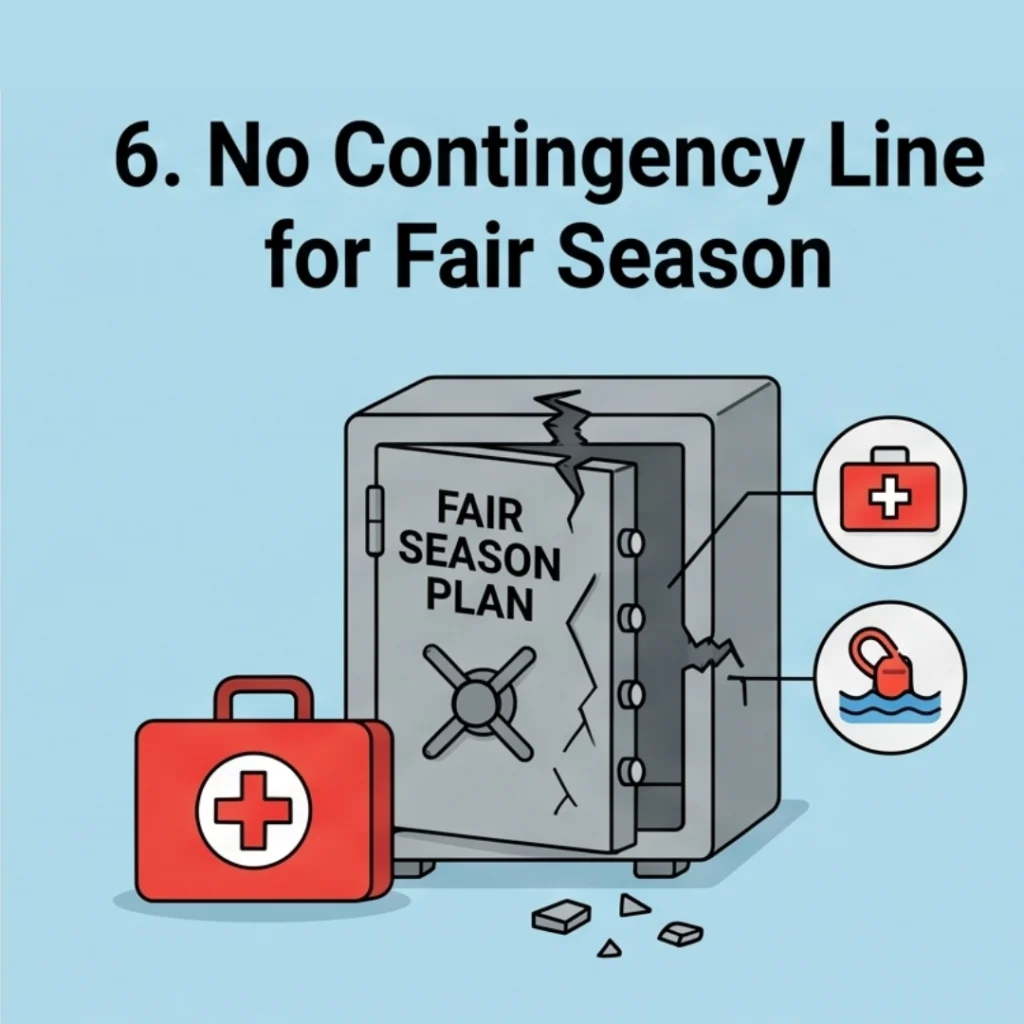
6. No Contingency Line for Fair Season
Reprints and rush freight during fair season are treated as emergencies rather than as a predictable, budgetable cost. Without a dedicated contingency — typically 5–10% of the total materials budget — these costs get absorbed by quietly pulling from whatever line item hasn’t been spent yet, usually a future quarter’s digital campaign.
The irony is that these costs aren’t actually unpredictable. Every fair season produces at least one city that oversells its expected footfall and at least one shipment that clears customs later than planned. A contingency line isn’t a hedge against an unlikely event — it’s a budget line for something that happens most years, just not in a way that can be assigned to a specific fair in advance.
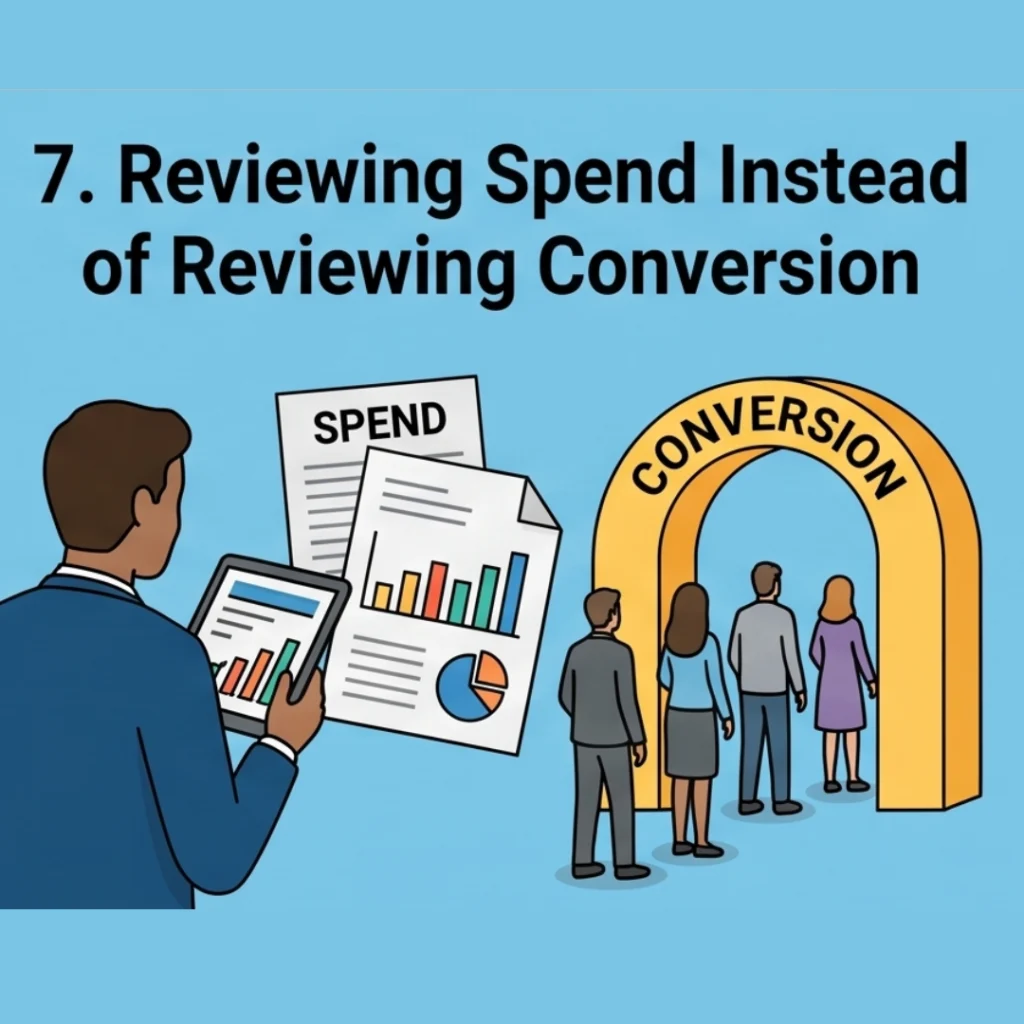
7. Reviewing Spend Instead of Reviewing Conversion
Mid-year budget reviews often check whether each channel is on pace to spend its allocation, rather than whether that spend is converting. A channel can be perfectly on-budget and still be badly under-performing relative to what it should be delivering at that funnel stage — a gap that a spend-paced review will never surface.
A more useful mid-year check pairs spend-to-date with conversion-to-date for each funnel stage, and flags any stage where conversion is lagging spend — regardless of whether that stage is on, under, or over its budget pace.
The Pattern Behind All Seven
Each of these mistakes has a different symptom, but the same root cause: the budget is built once, against assumptions, and then largely left alone until the numbers come in at year-end. The fix isn’t a bigger budget — it’s a handful of checkpoints built into the calendar itself: a landed-cost check before print is finalized, a quarterly agent review, a protected follow-up line item, and a contingency fund that’s actually held back rather than quietly spent.
None of these checkpoints require new headcount or new software — most can be built as recurring calendar entries against an existing budget spreadsheet. The value isn’t in the sophistication of the fix; it’s in making sure the check actually happens on schedule, rather than only when a number looks obviously wrong after the fact.
Frequently Asked Questions
Which of these mistakes has the biggest financial impact?
Quoting print cost instead of landed cost tends to create the largest single gap between planned and actual spend, since the difference compounds across every unit shipped rather than showing up as one isolated cost.
How can a small recruitment team catch these without adding headcount?
Most of these are calendar fixes rather than staffing fixes — building a landed-cost check, an agent review date, and a contingency line into the existing budget calendar catches the majority of the gap without needing additional people.
Which mistake is easiest to fix first?
Adding a contingency line for fair-season reprints is typically the fastest win — it requires no process change, only setting aside 5–10% of the materials budget upfront rather than discovering the need for it mid-season.
Closing Thought
None of these seven mistakes is a failure of effort — they’re structural gaps in how recruitment budgets typically get built and reviewed. Naming them is usually enough to start catching them; the harder part is building the checkpoints that catch them automatically next cycle, rather than relying on someone to remember.